

For every creative writer, the allure of historical icons and legendary stories is undeniable. The concept of the “public domain” represents a treasure trove of cultural heritage that allows new generations of authors to remix, reimagine, and rebuild upon the foundations of the past. However, as recent headlines regarding high-profile characters have shown, the transition from corporate asset to public property is rarely as simple as a calendar flip.
Understanding the Public Domain
The public domain refers to creative works that are no longer protected by intellectual property laws, such as copyright. Once a work enters this space, the public—including writers, filmmakers, and artists—can use it without seeking permission or paying royalties. In the United States, corporate-owned works typically enter the public domain after 95 years.
While this sounds like a free-for-all, there are significant legal hurdles, primarily involving the distinction between copyright and trademark. While copyrights expire, trademarks do not, provided the company continues to utilize the asset in commerce. This creates a complex landscape where you might be able to use a character’s original iteration but none of the “modern” elements that audiences recognize today.
Recent Arrivals: The Steamboat Willie Era
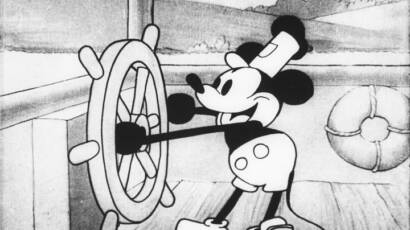
The most significant recent entry into the public domain is the 1928 version of Mickey Mouse as seen in Steamboat Willie. This has sparked a wave of “public domain” discourse, but writers must be extremely cautious because Disney was very pro-active in protecting their asset.
- Version Specificity: Only the specific version of Mickey from the 1928 short is available for use.
- Design Limitations: You cannot include modern attributes, such as Mickey wearing white gloves, as those were added in later versions that are still under copyright.
- No Affiliation: You cannot market your work in a way that suggests it is a Disney production or use Disney’s name to promote it.
Trademark Barriers: Disney was smart at being proactive in making things complicated by trademarking several scenes from the early work. Certain scenes, like Mickey at the ship’s wheel, are trademarked by Disney for film openings and merchandise, meaning you cannot monetize that specific imagery at will. Disney did this almost immediately after losing the battle to protect their work, suggesting Mickey himself was trademarked as the mascot of Disney. You saw shirts and merchandise show up in their parks, and the Disney animation opening sequence changed to show use in the market to further strengthen it.
Interesting to note: Disney, and Mickey, are what led the way to modern public domain laws in the U.S. The original law suggested that work would enter public domain after 54 years, which means Mickey would have entered it around 1984. Disney, and several other major companies, instead lobbied to extend the time frame. The first ruling in 1976 extended the timeframe to 75 years, putting Mickey at 2003. Then in 1998 Disney won another argument which extended the time frame by another 20 years, putting Mickey in public domain in 2024, 95 years after creation.
However this hasn’t stopped people from abusing the public domain. Much like Winnie The Pooh recently, we have seen several horror like adaptations and works that Disney would never do with their iconic mouse. We also have several video games that take “inspiration” from the work coming out this year.
The Horizon: Major Characters Coming Soon
The coming decade will see several more “titans” of industry enter the public domain. This shift will fundamentally change how independent creators can interact with superhero mythology.
| Character / Work | Expected Public Domain Year | Key Restrictions to Consider |
|---|---|---|
| Superman (Action Comics #1) | 2034 | Trademarks on the logo, suit, and catchphrases remain. |
| Batman (Detective Comics #27) | 2039 | Early versions only; modern gadgets and lore remain protected. |
| Wonder Woman (Sensation Comics #1) | 2041 | Original 1940s iteration only. |
When Superman enters the public domain in 2034, writers will be able to use the version of the character from Action Comics #1. However, DC and Warner Bros., much like Disney, maintain trademarks on nearly every recognizable element, including his iconic logo(s), the specific design of his suit, and even his underpants. Furthermore, modern iterations—such as Superman having an office job or his specific set of contemporary powers—remain off-limits.
Even the phrase “Man of Steel” is trademarked by WB in several different industries. With the recent film release WB added an additional 11 trademarks to cover every aspect of the new shield “S” logo across every industry. WB, much like Disney, also shows use by placing Superman on merchandise including lunch boxes, t-shirts, and other items to protect the asset against claims in various industries.
So while you could technically use the original “Superman,” there are so many barriers along the way that would make it very complicated to do so, and this is purposely done so nobody attempts to do it in a way that hurts the IP for WB.
Best Practices for the Modern Writer
If you intend to utilize public domain assets in your writing, it is essential to approach the task with both legal diligence and professional integrity.
- Read the Source Material: You must literally read every iteration of the character or watch every short film to ensure your new story doesn’t accidentally include an attribute or plot point introduced in a version that is still copyrighted.
- Establish Zero Affiliation: Ensure your creations have no affiliation with the original companies. Avoid using company names or branding in your marketing.
- Prioritize Quality: Whether you are writing for a personal portfolio or a public platform, don’t utilize the asset just to utilize it. Enter the project with good reason, a good twist, something that makes your idea different.
- Build Your Own Brand: Use these opportunities to grow your own name. Instead of just copying news or existing stories, use your unique opinion and creative voice to make the public domain work your own. You won’t necessarily be able to build a brand off something already established, but you can utilize it to get attention and grow from there.
Writing is a world of dedication. While the public domain offers a vast playground of characters, your success as a writer will ultimately depend on your ability to innovate and improve upon those legends while respecting the legal boundaries that remain in place.